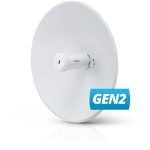















Ubiquiti UBB-Single – 60 GHz Wireless Point-To-Point Bridge
The Ubiquiti UBB-Single is a high-performance wireless bridge designed to provide reliable and secure connectivity for enterprise networks. This device features a 60 GHz wireless point-to-point bridge with a 5 GHz backup radio, ensuring uninterrupted communication even in the most demanding environments. The 60 GHz frequency band offers a high level of immunity to interference, making it ideal for applications where reliability is paramount. The device’s architecture is designed to provide high-throughput and low-latency connectivity, making it suitable for a wide range of enterprise use-cases, including data center interconnects, campus networks, and remote office connectivity.
The device’s technical features include advanced modulation and coding schemes, which enable high-speed data transfer rates and reliable communication over long distances. the device’s backup radio provides a redundant connection, ensuring that communication is maintained even in the event of a primary link failure. This feature is particularly important for enterprise networks, where downtime can have significant consequences.
In terms of enterprise use-cases, the Ubiquiti UBB-Single is well-suited for a variety of applications, including data center interconnects, campus networks, and remote office connectivity. The device’s high-throughput and low-latency connectivity make it ideal for applications that require fast and reliable data transfer, such as data replication, backup, and disaster recovery.
Technical Specifications
| Brand | Ubiquiti |
| SKU | UBB-Single |
| Category | Networking |
| Frequency | 60 GHz |
| Backup Radio Frequency | 5 GHz |
| Architecture | Point-To-Point Bridge |
| Capability | High-Throughput Connectivity |
| Capability | Low-Latency Connectivity |
| Capability | Redundant Connection |
| Capability | Advanced Modulation and Coding Schemes |
| View all Ubiquiti Products → | |
Challenges Solved by this Solution
Enterprise networks often face significant challenges in terms of bandwidth bottlenecks, packet loss, and network latency. These issues can have a major impact on network performance, leading to decreased productivity and increased costs. The Ubiquiti UBB-Single is designed to address these challenges by providing high-throughput and low-latency connectivity. By deploying this device, enterprises can improve network performance, reduce latency, and increase overall network reliability. This can lead to significant technical ROI, operational efficiency, and reduced IT overhead.
 Australian Logistics & B2B Support
As a 100% Aussie-owned and operated business, we are a trusted partner for Ubiquiti. We empower enterprise procurement with dedicated B2B account support and flexible payment options.
Frequently Asked Questions
What is the typical range of a 60 GHz wireless point-to-point bridge?
The typical range of a 60 GHz wireless point-to-point bridge can vary depending on the specific environment and conditions, but it is generally suitable for connections up to several kilometers.
How does the 5 GHz backup radio work?
The 5 GHz backup radio provides a redundant connection, ensuring that communication is maintained even in the event of a primary link failure.
Can this device be used for data center interconnects?
Yes, the Ubiquiti UBB-Single is well-suited for data center interconnects, providing high-throughput and low-latency connectivity.
Can the TECHOM Systems Sales team help with installation and support?
Yes, the TECHOM Systems Sales team can provide assistance with installation, support, and other services to ensure a smooth deployment and optimal performance.
What kind of security features does this device have?
The Ubiquiti UBB-Single has advanced security features, including encryption and authentication protocols, to ensure secure communication and protect against unauthorized access.

Ready to Deploy Ubiquiti Building Bridge, 60 Ghz Wireless Point-toppointbbridge With 5 Ghz Backup Radio. (UBB-Single)?
Product Ref: TOS-871511 • Get enterprise pricing, volume discounts, and Australian support.