





When evaluating unified communications (UC) solutions, the comparison between Ribbon and AudioCodes becomes a critical decision point for organizations investing in modern Voice Infrastructure Solutions. Both vendors deliver enterprise-grade platforms that enable seamless integration of voice, data, and cloud services. However, their architectural designs, deployment flexibility, and scalability approaches differ, making it essential to align each solution with specific business and technical requirements.
From a strategic perspective, Ribbon is widely recognized for its strength in SBC Solutions, particularly for carrier-grade environments and large-scale deployments. AudioCodes, on the other hand, focuses on application integration, endpoint devices, and strong compatibility with cloud ecosystems. Understanding these distinctions helps organizations choose the right platform based on their network complexity, cloud adoption strategy, and long-term communication goals within evolving Cloud Communications environments.
Unified Communications Architecture Comparison
Understanding the foundational architecture of Ribbon and AudioCodes is essential for assessing their compatibility with modern UC environments and evolving SBC Solutions. Ribbon specializes in IP-based voice solutions with a strong focus on SIP (Session Initiation Protocol) interoperability, while AudioCodes emphasizes traditional PSTN integration alongside IP convergence.
1. Core Technology Approach
Ribbon adopts a cloud-first, software-driven model that supports virtualization and open standards. This makes it highly adaptable for organizations moving toward Cloud Communications. AudioCodes takes a more hardware-oriented approach, offering purpose-built appliances that ensure stability and compatibility with existing enterprise voice systems.
2. Deployment Model
Ribbon’s solutions are designed for distributed deployments across cloud and hybrid infrastructures, enabling flexibility in how services are rolled out. In comparison, AudioCodes emphasizes structured, centralized deployment models that simplify management in controlled enterprise environments.
3. Scalability Capabilities
Ribbon leverages containerized and cloud-native architecture to support rapid scaling across geographically distributed networks. AudioCodes provides scalability through modular expansion, allowing organizations to grow their Voice Infrastructure Solutions in a controlled and predictable manner.
4. Use Case Alignment
Ribbon is particularly well-suited for large enterprises and service providers requiring advanced SBC Solutions and high scalability. AudioCodes excels in environments where tight integration with enterprise applications and reliable voice connectivity are the primary priorities.
Ribbon vs AudioCodes Feature Comparison
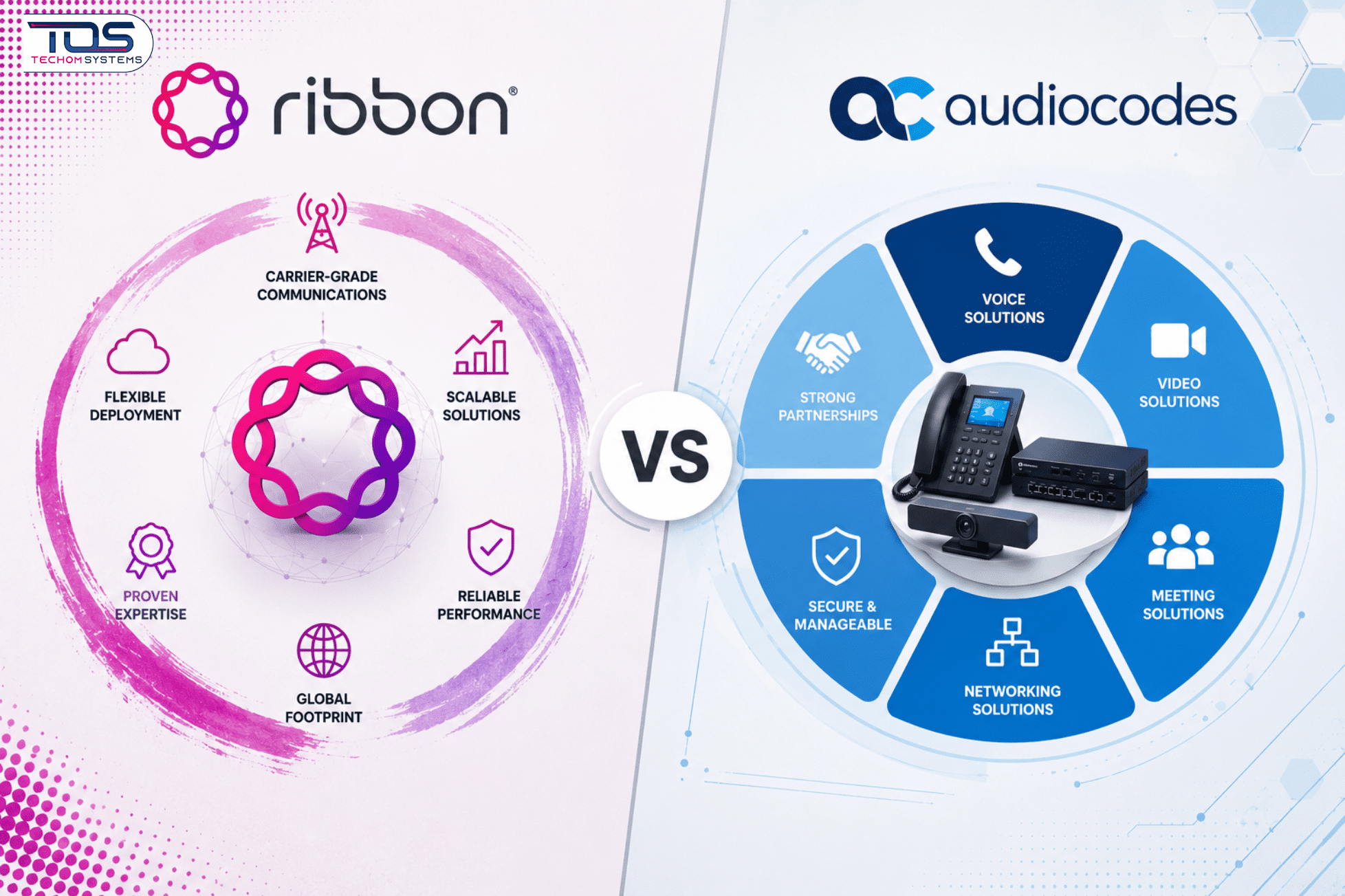
A feature comparison matrix provides a structured overview of Ribbon and AudioCodes capabilities, highlighting differences in performance, scalability, integration, and deployment options to support informed decision-making for unified communications strategies.
| Feature | Ribbon | AudioCodes |
|---|---|---|
| Codec Support | G.711, G.722, Opus, AAC_LD | G.711, G.729, G.722, iLBC |
| Latency Performance | 15-30ms (cloud-optimized) | 40-60ms (hybrid environments) |
| Security Protocols | SIP TLS 1.2, SRTP, AES-256 | SIP TLS 1.2, SRTP, IPsec |
| Cloud Integration | Native AWS/GCP support | VMware vSphere optimization |
| API Capabilities | RESTful, WebSockets, GraphQL | SOAP, REST, Custom SDKs |
Scalability, Security, and Use Case Evaluation
Organizational requirements dictate the optimal choice between Ribbon and AudioCodes. Ribbon excels in cloud-first environments requiring rapid deployment and interoperability with modern SBCs (Session Border Controllers). AudioCodes remains advantageous for enterprises with legacy PBX systems needing gradual IP migration.
- Cloud Readiness: Ribbon is designed for modern, cloud-driven infrastructures, offering flexibility and seamless integration with hybrid and multi-cloud setups. AudioCodes supports cloud integration but primarily focuses on extending existing on-premise systems.
- Enterprise Scalability: Ribbon utilizes a microservices-based architecture that enables elastic scaling to support over 10,000 endpoints with low latency. AudioCodes supports large environments as well, but scaling beyond 5,000 endpoints typically requires additional dedicated hardware.
- Deployment Approach: Ribbon enables faster and more flexible deployments across distributed environments. In contrast, AudioCodes relies on appliance-based implementations, making it more structured but less agile in dynamic network scenarios.
- Security and Compliance: Both platforms meet major compliance standards such as GDPR and HIPAA. Ribbon offers automated compliance reporting capabilities, while AudioCodes provides detailed access controls, though audit management often requires manual configuration.
Expert Technical Perspective
“Ribbon’s cloud-native design offers superior agility for modern UC environments, while AudioCodes maintains an edge in legacy system integration,” notes Dr. Emily Tran, UC Architect at TechForge Solutions. “The choice depends on whether your organization prioritizes future-proof infrastructure or seamless legacy interoperability.”
Key Implementation Considerations
Deployment complexity varies significantly between the two platforms, particularly in the context of modern Voice Infrastructure Solutions. Ribbon’s containerized architecture requires DevOps expertise for orchestration and management, making it better suited for organizations with advanced technical capabilities. In contrast, AudioCodes’ appliance-based model simplifies deployment, making it more accessible for IT teams familiar with traditional UC infrastructure.
Cost Structure Analysis
- Ribbon: Pay-as-you-go cloud model with variable cost per endpoint
- AudioCodes: Upfront hardware investment with predictable annual licensing
Vendor Ecosystem
Ribbon partners with cloud providers for managed services, while AudioCodes maintains strong relationships with enterprise telecom providers for on-premises solutions.
Frequently Asked Questions
1. What are the primary use cases for Ribbon?
Ribbon is best suited for organizations needing cloud scalability, strong SIP interoperability with SBCs, and seamless API-driven integration with business applications in modern, distributed unified communications environments.
2. How does AudioCodes handle legacy system integration?
AudioCodes enables smooth migration by using dedicated gateways and protocol translation technologies to connect legacy PBX systems with IP networks, ensuring continuity and interoperability during gradual transformation processes.
3. Which platform offers better security features?
Both platforms provide enterprise-grade security; Ribbon offers automated compliance reporting and real-time threat detection, while AudioCodes focuses on granular access control, encryption, and secure configuration within enterprise voice environments.
4. Can these solutions coexist in a hybrid environment?
Yes, both support hybrid deployments; Ribbon integrates more easily with cloud services and modern infrastructures, while AudioCodes often requires additional gateways to connect on-premises systems with cloud-based communication platforms.
5. What are the deployment timelines for each solution?
Ribbon deployments typically complete within two to four weeks due to cloud-native architecture, while AudioCodes implementations may take six to eight weeks because of hardware installation and configuration requirements.
Your Partner in Modern Communication: TECHOM Shop
Choosing TECHOM Shop means partnering with a trusted provider that delivers reliable, high-performance communication solutions tailored to modern business needs. With strong expertise in SBC Solutions, TEHCOM Shop ensures secure, seamless connectivity, improved call quality, and optimized network performance for unified communications environments.
TECHOM SHOP also excels in delivering scalable and efficient Cloud Communications, enabling organizations to transition smoothly from traditional systems to flexible, cloud-based platforms. This approach supports business growth while reducing operational complexity and costs.
From consultation to deployment and ongoing support, TECHOM Shop combines technical expertise with a customer-first approach, helping businesses build future-ready communication ecosystems that are secure, scalable, and easy to manage.
Conclusion
Choosing between Ribbon and AudioCodes ultimately depends on your organization’s infrastructure, scalability needs, and long-term communication strategy. Ribbon stands out for its cloud-native design, strong SIP interoperability, and advanced SBC Solutions, making it ideal for businesses prioritizing flexibility and large-scale deployments.
AudioCodes, on the other hand, offers a reliable path for organizations working with legacy systems, providing robust integration capabilities and stable performance within traditional voice environments. Its appliance-based approach makes it a practical choice for gradual migration strategies.
By carefully evaluating use cases, deployment models, and security requirements, businesses can select the platform that best aligns with their goals. Whether modernizing networks or transitioning to Cloud Communications, the right choice will ensure improved performance, scalability, and future-ready communication infrastructure.
Explore the best SBC Solutions and Cloud Communications with TECHOM Shop and transform your infrastructure today. Get in touch now!

Peter Pawlak, Director of Sales and Customer Advocate, brings over 15 years of experience helping ambitious business owners grow with confidence. His mission is to empower people to start, build, and run their businesses successfully, turning ideas into thriving ventures. Peter’s passion for business transformation and his results-driven approach have been key to guiding entrepreneurs toward faster and smarter growth.