





Australian organisations modernising communications face a critical decision. The AudioCodes vs Cisco question sits at the centre of many enterprise voice strategies. Choosing the wrong platform can create long-term challenges. It may require new hardware purchases and additional staff training. Workflows may need redesigning. Trust in everyday communication systems can also suffer.
For IT Directors, CIOs, and Procurement Managers, this decision has lasting implications. It influences operational stability, security, and total cost of ownership. These factors become especially important during a Microsoft Teams voice rollout. This article explores how experienced buyers approach the decision with confidence.
Key Insight:
Vendor selection is rarely about a single feature. It is about choosing a partner that reduces operational risk. That decision affects the entire technology lifecycle. For most organisations, that lifecycle spans five years or more. The right partner helps improve stability, support, and long-term value.
The Cost of Choosing the Wrong Communications Platform
Communications platforms support almost every business process. When a voice platform underperforms, problems spread quickly. Call quality issues can erode customer trust. Failed integrations can slow help desk teams. Unplanned downtime can disrupt sales calls, support queues, and internal collaboration.
Many organisations underestimate the hidden costs of a poor platform decision. Retraining staff on a replacement system can consume weeks of productivity. Migrating phone numbers, call flows, and integrations adds pressure on IT teams. Rebuilding user confidence after a difficult rollout often takes even longer.
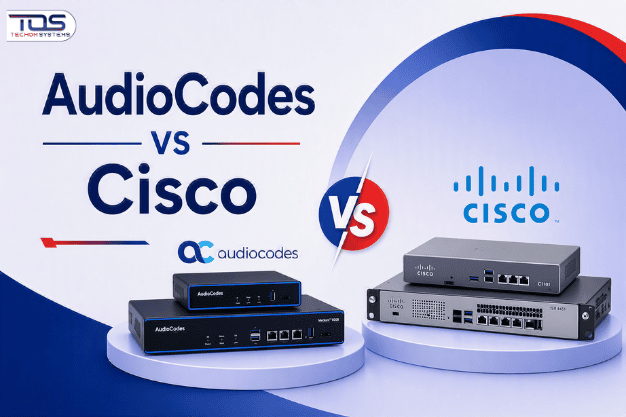
This is why the AudioCodes vs Cisco discussion deserves more than a feature checklist. Decision-makers need a clear view of real-world performance. They must understand how each platform performs under operational pressure. Sales demonstrations rarely tell the full story.
How Australian Enterprises Evaluate Voice Platforms Today
Enterprise buyers no longer evaluate voice platforms in isolation. They assess how each option fits within a broader Microsoft 365 environment. Security requirements also play a major role in the decision. Operational efficiency is another key consideration. Five priorities consistently shape the evaluation process.
Microsoft Teams Compatibility and Native Integration
Most Australian enterprises have already standardised on Microsoft Teams for collaboration. The voice layer needs to extend that investment, not compete with it. Buyers look for direct routing support, certified session border controllers, and IP phones built specifically for the Teams interface.
Business Continuity and Session Border Control
A voice platform must keep working when networks fail, links drop out, or call volumes spike unexpectedly. Resilient session border control, automatic failover, and local survivability are non-negotiable for organisations running contact centres or multi-site operations. This is often the first practical test buyers apply when weighing AudioCodes vs Cisco options for a resilient rollout.
Security and Compliance Requirements
Voice traffic carries sensitive commercial and customer information. Enterprise buyers expect encrypted signalling and secure device management. They also need platforms that align with broader IT governance frameworks. Compliance requirements are especially important in regulated industries. For many organisations, this is a board-level concern. It is no longer just an IT preference.
Deployment Flexibility: Cloud, Hybrid, and On-Premises
No two organisations deploy communications the same way. Some need a fully cloud-based rollout across distributed offices. Others need hybrid environments that bridge legacy PBX infrastructure with Teams voice during a staged migration. Platform flexibility determines how smoothly that transition happens.
Lifecycle Management and Total Cost of Ownership
Purchase price is only one part of the equation. Firmware updates also affect long-term value. Device management tools can influence operational efficiency. Warranty terms play an important role in support planning. Vendor roadmap support impacts future technology decisions. Together, these factors shape total cost of ownership. Organisations that plan for the full lifecycle avoid costly surprises later. Those surprises often emerge three or four years after deployment. Lifecycle planning is a core part of any serious AudioCodes vs Cisco evaluation. It should never be treated as an afterthought.
Why Vendor Ecosystems Matter More Than Individual Devices
A single well-reviewed handset rarely determines the success of an enterprise rollout. What matters more is the ecosystem behind it. Key factors include firmware consistency and management platforms. Interoperability testing is equally important. Vendor responsiveness also matters when Microsoft updates Teams.
This is where the AudioCodes vs Cisco comparison becomes more useful. Many organisations evaluate AudioCodes for long-term Microsoft Teams strategies. They often value its purpose-built Teams integration. Predictable device management is another advantage. These strengths fit naturally within Microsoft-first environments.
A strong ecosystem also reduces fragmentation risks. Consistent product families simplify deployment and ongoing management. IT teams spend less time troubleshooting compatibility issues. They can focus more on supporting business outcomes. An established AudioCodes Distributor Australia partner strengthens that consistency. Local stock availability improves deployment planning. Testing and support services add further value.
Questions Every CIO Should Ask Before Standardising Voice Infrastructure
Before committing to a platform, experienced technology leaders ask a consistent set of questions. These questions help identify the best business fit. They also prevent decisions based solely on short-term pricing incentives. The same approach applies across different vendor comparisons. It remains relevant whether evaluating AudioCodes vs Cisco or a broader shortlist of providers.
- Does this platform support our current and planned Microsoft Teams direct routing model?
- What happens to call continuity if our primary internet link fails?
- How are firmware updates and security patches managed across hundreds of endpoints?
- Can the platform scale across new sites without a redesign of core infrastructure?
- What level of local support does our distributor provide after go-live?
- How does this decision affect staff training and change management timelines?
- What is the realistic five-year total cost of ownership, not just the purchase price?
Planning a Microsoft Teams Voice Roadmap
A successful rollout rarely happens in one step. Most Australian enterprises follow a staged roadmap. The process typically includes assessment, pilot deployment, phased migration, and full standardisation. Early planning helps align business priorities with deployment requirements. This approach reduces the risk of costly rework later. It remains important regardless of the outcome of an AudioCodes vs Cisco evaluation.
Business Priority | What Enterprise Buyers Look For | Roadmap Stage |
Teams Direct Routing | Certified SBC support and native Teams device certification | Assessment & Pilot |
Business Continuity | Local survivability, automatic failover, redundant links | Pilot & Migration |
Multi-Site Scalability | Centralised device management and consistent firmware | Phased Migration |
Lifecycle Support | Local warranty, roadmap alignment, distributor responsiveness | Standardisation |
Reducing Communication Risk During Business Growth
Growth changes the demands placed on a voice platform. New offices require consistent call quality from day one. Acquisitions often introduce inherited infrastructure. That infrastructure must integrate quickly with existing systems. Remote and hybrid teams expect reliable performance wherever they work. Revisiting the AudioCodes vs Cisco question during growth phases is often worthwhile. It helps confirm the original platform choice still meets business needs.
Organisations that plan for growth choose platforms that scale without major redesigns. New sites should be easy to add without disrupting existing operations. Enterprise-proven endpoints and gateways support that scalability. The right technology foundation also simplifies future expansion. Working with an AudioCodes Distributor Australia partner adds further value. Experienced partners understand multi-site rollouts and complex enterprise environments. Their expertise extends beyond single-office deployments.
The Value of an Experienced AudioCodes Distributor in Australia
Hardware alone does not deliver a successful rollout. Deployment guidance is equally important. Configuration support also plays a critical role. Ongoing lifecycle management helps maximise long-term value. Devices are only one part of the solution. This is why choosing an experienced AudioCodes Distributor Australia partner carries real commercial value.
A knowledgeable local distributor helps validate compatibility before purchase. They can also help plan realistic rollout timelines. Responsive support is available when issues arise. For procurement teams, this reduces deployment risk. For IT teams, it means fewer surprises during implementation.
As a trusted TECHOM Shop partner, buyers gain access to specialised product expertise for the Australian enterprise market. This is not a generic global reseller experience. Organisations benefit from local knowledge and practical deployment guidance. They also receive support tailored to Australian business requirements.
Recommended AudioCodes Solutions for Enterprise Deployments
The right endpoints depend on how and where an organisation communicates. Different teams often have different communication requirements. Two AudioCodes products consistently support enterprise Microsoft Teams deployments. They perform well across a wide range of industries. Sourcing them through a trusted AudioCodes Distributor Australia supplier provides added confidence. Organisations gain access to genuine stock, warranty protection, and configuration support.
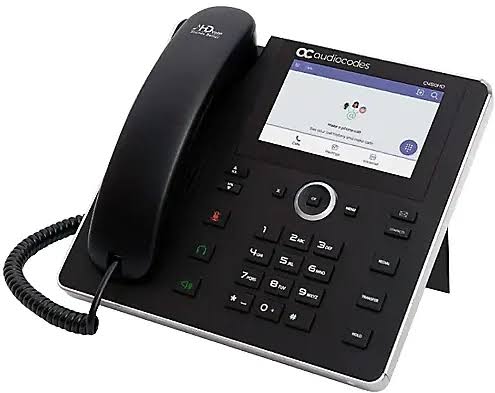
AudioCodes C450HD IP Phone (SKU: UC-C450HDEG)
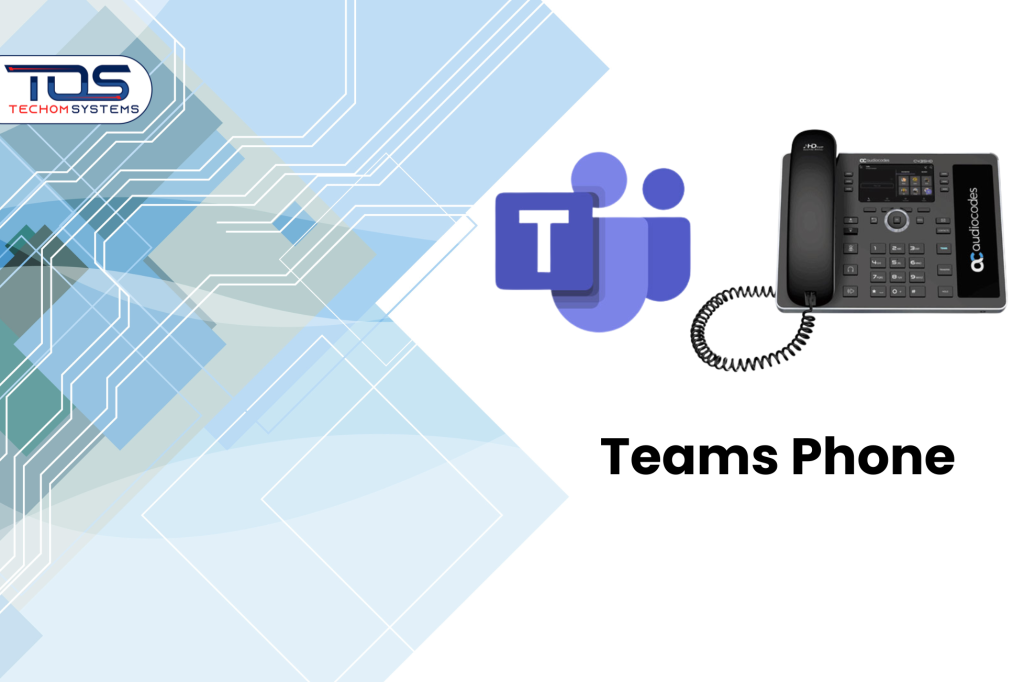
The AudioCodes C450HD IP Phone (SKU: UC-C450HDEG) is a professional Microsoft Teams and enterprise voice endpoint. It suits executive offices, finance teams, and healthcare administration. It also performs well in environments where call clarity and security are essential. The native Teams interface simplifies day-to-day use. Staff already familiar with Microsoft Teams require less training. This supports faster adoption across the organisation.
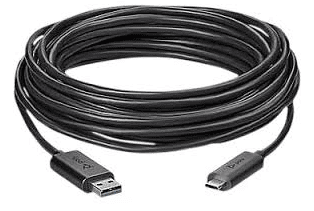
AudioCodes USB 3.1 Active Optical Cable (SKU: USB-AFM-10M)
This AudioCodes USB 3.1 Active Optical Cable (SKU: USB-AFM-10M) provides reliable USB 3.1 connectivity over extended distances. It is ideal for meeting rooms, boardrooms, and AV installations. Standard copper cabling often struggles in these environments. The cable supports stable performance across larger deployment areas. It is well suited to organisations upgrading collaboration spaces. Many businesses use it alongside broader Microsoft Teams voice rollouts. It is especially valuable across large floor plates and multi-room venues.
Key Takeaways
- The AudioCodes vs Cisco decision carries long-term operational and financial consequences beyond the initial purchase.
- Microsoft Teams compatibility, business continuity, and security should lead the evaluation criteria.
- Vendor ecosystems and lifecycle support matter as much as individual device specifications.
- A staged roadmap reduces risk compared with a single, organisation-wide switch-over.
- Working with an established AudioCodes Distributor Australia partner materially improves deployment outcomes and long-term support.
Frequently Asked Questions
#1. Is AudioCodes compatible with Microsoft Teams Direct Routing?
Yes. AudioCodes offers certified session border controllers and IP phones purpose-built for Microsoft Teams Direct Routing, supporting both cloud and hybrid deployment models.
#2. How does the AudioCodes vs Cisco decision affect deployment timelines?
Timelines depend on existing infrastructure and rollout scope. Organisations comparing AudioCodes vs Cisco typically find that native Teams certification simplifies configuration, which can shorten pilot and migration phases.
#3. What support should we expect from an AudioCodes Distributor in Australia?
Expect pre-purchase compatibility guidance, deployment support, warranty handling, and access to local technical advice throughout the device lifecycle, not just at the point of sale.
#4. Can AudioCodes devices support multi-site organisations?
Yes. Centralised device management and consistent firmware across the AudioCodes range support scalable rollouts across multiple offices and regions. Working through an AudioCodes Distributor Australia partner keeps that consistency intact site by site.
#5. Do we need to replace all existing hardware to move to Microsoft Teams voice?
Not necessarily. Many organisations run a staged migration, integrating new Teams-certified endpoints alongside existing infrastructure before a full standardisation phase.
Explore AudioCodes Solutions with TECHOM Shop
Selecting the right enterprise voice partner is a long-term decision, not a single transaction. Whether your organisation is comparing AudioCodes vs Cisco for the first time or refining an existing Microsoft Teams strategy, the right guidance makes the difference between a smooth rollout and a costly redesign.
Explore the full AudioCodes Range at TECHOM Shop, compare enterprise voice platforms with confidence, and Get a Quote from a team that understands Australian enterprise deployments. Request expert advice today and take the next step toward a secure, reliable Microsoft Teams voice environment.

Peter Pawlak, Director of Sales and Customer Advocate, brings over 15 years of experience helping ambitious business owners grow with confidence. His mission is to empower people to start, build, and run their businesses successfully, turning ideas into thriving ventures. Peter’s passion for business transformation and his results-driven approach have been key to guiding entrepreneurs toward faster and smarter growth.