





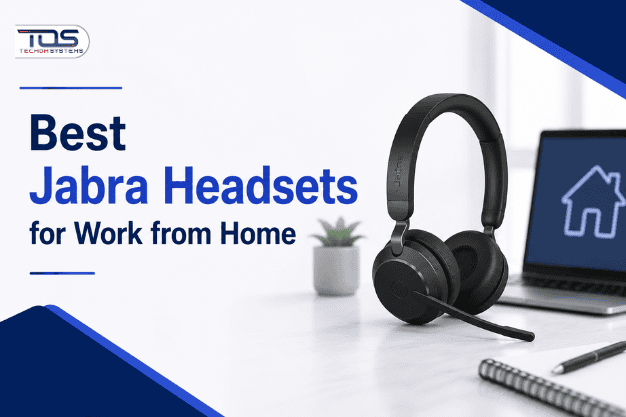
Every growing business eventually asks the same question about the Best Jabra Headsets for Work from Home. Should the business standardise, or let staff manage their own audio setup? For organisations with over fifty remote or hybrid staff, that question appears sooner than expected. It usually follows several weeks of repeated IT complaints.
That’s usually where the search ends. Procurement and IT compare options against support tickets and lost meeting time. Jabra Headsets for Work from Home range at TECHOM Shop often comes out on top. It is not because of the badge on the box. It is because of the problems it actually solves.
The Scenario Every IT Manager Recognises
Picture a mid-sized Australian logistics business. Eighteen months ago, its remote customer support team had five people. Each used a different home headset.
Today that team is sixty people spread across four states, and the IT Manager is fielding audio complaints most weeks: dropped calls, muffled voices, staff switching between three different consumer headsets mid-shift.
None of this happened because anyone made a bad decision. It happened because nobody made a decision at all, and the business simply outgrew an informal approach. This is the exact situation that pushes businesses to finally look seriously at the best Jabra headsets for work from home, rather than another temporary fix.
Three Signals It’s Time to Formalise a Headset Standard
Most businesses do not plan this transition. They stumble into it once a few warning signs pile up at the same time.
- Support tickets mentioning “cannot hear” or “keeps cutting out” start showing up weekly, not occasionally.
- New hires arrive with no guidance on approved equipment, so everyone buys something different.
- Warranty claims and replacements become impossible to track across five different brands.
Any one of these is manageable on its own. All three together usually means it’s time for a proper standard, not another one-off purchase.
A Headset Standard Is Not the Same as a Headset Budget
Plenty of businesses already have a headset budget line. Very few have an actual standard, and the difference matters more than it sounds.
A budget sets a spending limit. A standard defines approved headset models. It also outlines replacement approvals and ordering rules. The standard assigns ownership when new teams start up. A formal standard, built around the Best Jabra Headsets for anywhere, turns the decision into policy. It removes guesswork whenever someone joins the business.
Where Businesses Underspend, and Where It Costs Them Later
The instinct to buy the cheapest available headset is understandable, especially when a new hire needs kit by Monday. It’s rarely the cheaper option once you look past the invoice.
A device that fails after a year creates additional costs. It often leads to a repeat purchase and a support ticket. Staff may work without proper audio for several days. This usually prompts finance teams to review long-term costs. At that point, the Best Jabra Headsets for Work from Home may prove more cost-effective. Replacement costs and admin time add up quickly across larger teams.
Platform Reality: Supporting Teams and Zoom Without Picking Sides
Almost no Australian business runs on a single communication platform anymore. Client contracts, acquisitions, and department preference all push most organisations toward running Teams and Zoom side by side.
This is exactly where Jabra for Teams vs Zoom compatibility becomes a genuine procurement question rather than a technical footnote. IT teams do not want to buy twice because sales insists on Zoom while the rest of the business runs Teams.
Certified devices work reliably across both platforms. They eliminate compatibility concerns and reduce support issues. They also protect the investment if the business changes tools later.
Two Buyer Personas: The Contact Centre Lead and the Field Executive
The Contact Centre Lead
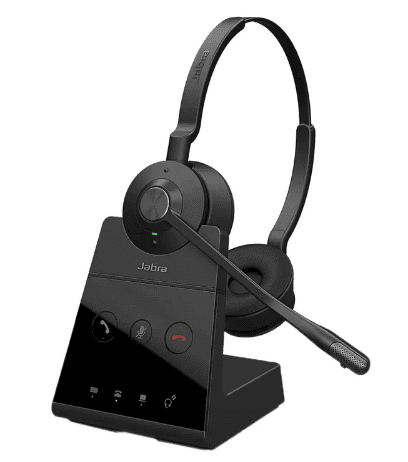
The team handles twenty to eighty agents on back-to-back calls. Most agents spend the majority of their shift on calls. Durability is essential in this environment. Consistent noise cancellation also matters more than most other specifications. The Jabra Engage 55 SE MS Stereo Link400A (SKU: 9659-450-111) is built for exactly this kind of continuous, high-volume use.
The Field Executive
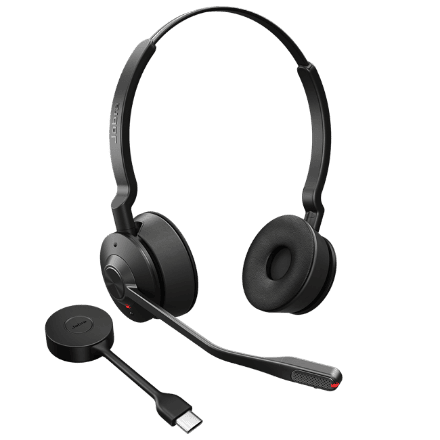
Splits time between a home office, client meetings, and travel, and rarely sits at one desk for a full day. The Jabra Engage 65 SE Convertible (SKU: 9655-553-117) offers wireless freedom without giving up call clarity between locations.
Most mid-sized businesses end up buying both. Matching the best Jabra headsets for work from home to these two profiles, rather than picking one device for everyone, is where most of the value shows up.
The Procurement Playbook: From Pilot to Fleet Rollout
Rolling out the best Jabra headsets for work from home in stages, rather than all at once, gives you real usage data before committing to the bigger spend.
Step One: Run a Small Pilot First
Rolling out the Best Jabra Headsets for Work from Home in stages reduces upfront risk. It gives you real usage data before a larger commitment. This approach helps validate performance and user satisfaction. It also supports more informed purchasing decisions.
Step Two: Negotiate Once You Have Data
Pilot data on failure rates, comfort, and platform performance gives procurement real leverage in volume pricing conversations, rather than negotiating blind.
Step Three: Build a Simple Onboarding Kit
Pair the headset with a one-page setup guide and a note on who to contact for support. This alone prevents a large share of week-one help desk tickets.
Step Four: Set a Replacement Cadence
Agree on a review point, usually every two to three years. This keeps replacements on a predictable schedule. It also prevents waiting until equipment fails.
Measuring Success After Rollout
A successful rollout delivers measurable results for IT and finance teams. It reduces support tickets and lowers replacement costs. The benefits extend beyond fewer complaints from staff.
- Fewer audio-related help desk tickets month over month.
- Shorter average handling time in customer-facing teams.
- Fewer rescheduled meetings due to technical issues.
- Fewer platform compatibility complaints, including anything tied to Jabra for Teams vs Zoom performance.
- Simpler warranty and replacement tracking across one or two SKUs instead of a dozen.
Reviewing these figures six months after rollout gives procurement solid evidence for the next budget cycle, and a clear answer if anyone questions the spend.
It also gives HR and operations something concrete to point to when new hybrid staff ask why the business standardised on one range instead of leaving the choice open. A short, evidence-backed answer usually settles that conversation quickly.
Common Mistakes Businesses Make When Buying at Scale
- Buying the cheapest option first, then quietly upgrading everyone within a year anyway.
- Ignoring Jabra for Teams vs Zoom certification during rollout, then discovering the gap during a client audit.
- Letting each department choose its own device, which kills any chance of volume pricing.
- Treating headsets as a one-off purchase instead of planning a replacement cycle from day one.
Skipping the pilot stage is a common mistake. Many businesses make it after choosing the
Best Jabra Headsets for Work from Home. A pilot helps identify issues before a wider rollout. It also provides real user feedback and performance data. This reduces risk and supports better purchasing decisions.
Frequently Asked Questions
#1. How do we know if it’s time to standardise on the best Jabra headsets for work from home?
If audio-related support tickets are becoming a weekly occurrence, or new hires are buying random devices, it’s usually time.
#2. Can the same headset really work for both Teams and Zoom?
Yes, provided it carries certification for both. This is the core of most Jabra for Teams vs Zoom compatibility questions IT teams raise during procurement.
#3. How many units should we pilot before a full rollout?
Ten to fifteen units across a mix of roles is usually enough to surface real issues before committing to a larger order.
#4. What’s a realistic replacement cycle for business headsets?
Most organisations plan for two to three years of daily use before reviewing replacements, depending on call volume.
#5. Do executives need the same headset as contact centre staff?
Not usually. Executives and mobile staff generally suit a convertible wireless model, while high-volume customer-facing teams need the durability of a dedicated stereo option.
Talk to TECHOM Shop About Your Rollout
TECHOM Shop works with Australian businesses transitioning from ad hoc headset purchases to a fleet standard. We support organisations at every stage of that process. Some businesses focus on contact centre durability requirements. Others need flexibility between Jabra for Teams and Zoom for hybrid roles.
Ready to pilot the Best Jabra Headsets for Work from Home in your own team? Explore the the Jabra Business Range and check current availability. You can also Request a Quote and speak with a workplace technology specialist. They can help plan a rollout that suits your organisation’s needs.

Peter Pawlak, Director of Sales and Customer Advocate, brings over 15 years of experience helping ambitious business owners grow with confidence. His mission is to empower people to start, build, and run their businesses successfully, turning ideas into thriving ventures. Peter’s passion for business transformation and his results-driven approach have been key to guiding entrepreneurs toward faster and smarter growth.