





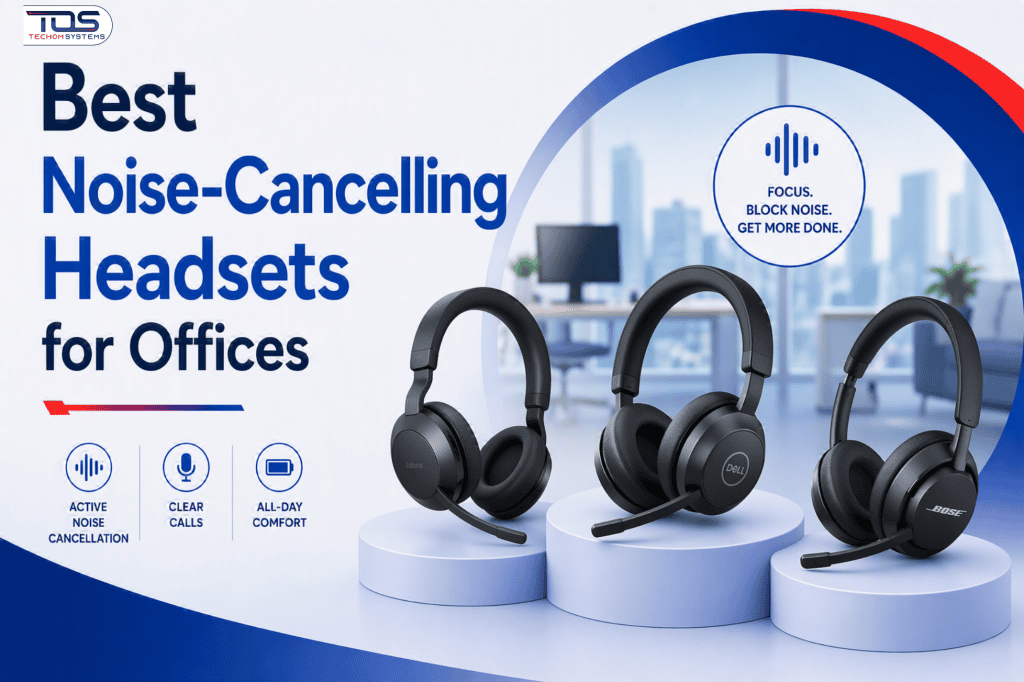
Every business communicates differently, but poor audio creates the same problems everywhere. Missed details, repeated questions, and staff who feel worn out by mid-afternoon. For many IT Managers and Operations leaders, the search for the best noise-cancelling headsets for offices starts with a support ticket, not a strategy. That’s usually where the real cost begins.
Treated properly, this is a business decision with genuine ROI implications, touching productivity, customer experience, and staff retention. This article breaks down how to approach it that way.
It also looks at where Jabra fits among the options worth evaluating, without treating any single brand as the automatic answer.
Why This Decision Sits Above IT
Office audio touches HR, Operations, Procurement, and frontline leadership, not just the helpdesk.
When a business treats headsets as pure hardware, it misses the bigger opportunity: fewer errors, faster meetings, and stronger customer trust. HR sees the wellbeing side. Operations sees the efficiency side. Procurement sees the cost side. Getting the best noise-cancelling headsets for offices right means answering to all three, not just one.
Four Signals It’s Time to Reassess Office Audio
These signals tend to appear well before anyone formally raises a concern about the best noise-cancelling headsets for offices currently in use.
- Meetings consistently run over their scheduled time
- Contact centre call resolution times are creeping up
- New hires struggle to hear clearly during onboarding calls
- Staff mention discomfort after full days on calls
Any one of these signals is worth investigating on its own. Two or more usually justifies a proper review of the best noise-cancelling headsets for offices available to your team.
How Business Stage Changes the Requirement
A ten-person startup and a two-hundred-seat contact centre don not need the same audio strategy, even if both are comparing the best noise-cancelling headsets for offices.
Growing Teams Establishing Standards Early
Smaller, growing businesses benefit from setting a consistent standard before ad hoc purchases create a mixed, harder-to-support fleet.
It’s far easier to standardise at twenty seats than to unwind five different headset models at two hundred.
Established Offices Managing Mixed Environments
Larger, established offices often inherit a patchwork of devices bought over several years. Standardising later almost always costs more than getting it right the first time.
A staged replacement plan, rather than a single bulk order, usually suits this situation best, especially once the best noise-cancelling headsets for offices have been shortlisted.
Distributed and Hybrid-First Organisations
Distributed teams rely entirely on audio quality to feel like one team. There’s no shared meeting room to fall back on when a call breaks up.
For these organisations, consistent audio is closer to core infrastructure than a nice-to-have accessory.
Contact Centre and High-Call-Volume Operations
High call volume operations feel audio problems fastest, through longer calls, repeat contacts, and agent fatigue by the end of a shift.
Even small improvements in call clarity tend to show up quickly in average handling time.
Building the Business Case: ROI Beyond the Price Tag
Purchase price is the easiest number to compare and often the least useful one on its own.
A more useful comparison looks at what each factor actually costs, or saves, once devices are in daily use across a team.
| Investment Factor | Business Impact |
|---|---|
Call clarity | Fewer repeated questions, shorter meetings |
Comfort for full-day wear | Less fatigue, more consistent output |
Platform certification | Fewer compatibility issues, less IT support time |
Build quality and warranty | Lower replacement frequency, better fleet economics |
Standardisation across teams | Simpler support, faster onboarding for new hires |
Viewed this way, the best noise-cancelling headsets for offices aren’t a cost to minimise. They’re an input to several other numbers your business already tracks.
Adoption Matters as Much as Hardware
The best device on paper still underperforms if staff don not actually use it properly.
Simple onboarding, clear guidelines, and consistent models across teams all improve real-world adoption. Businesses that skip this step often see solid hardware underperform, simply because staff were never shown how to use it well.
This is another reason the best noise-cancelling headsets for offices should be chosen alongside a short rollout plan, not purchased in isolation.
Before You Compare Providers, Confirm Internally
|
Evaluating Providers: Where Jabra Solutions Fits
Most procurement teams comparing the best noise-cancelling headsets for offices shortlist two or three providers before deciding. Jabra Solutions is a familiar name on that shortlist, particularly for teams standardised on Microsoft Teams.
A frequent question at this stage is which Jabra headset is best for calls? The honest answer depends on the role, not a single flagship model.
A good evaluation compares real call scenarios, not just spec sheets. TECHOM Shop can help facilitate that comparison for Australian teams before you commit to a fleet-wide purchase.
Matching Devices to Business Roles
Two models illustrate how differently roles can be served, even within the same organisation. This is where the best noise-cancelling headsets for offices stop being a category and start being a specific, defensible choice.
Working out which Jabra headset is best for calls usually starts here, not with a spec sheet.
Roles That Need Situational Awareness
For roles like reception and floor-based support, deciding which Jabra headset is best for calls often comes down to one simple question: does the role need to stay aware of the room?
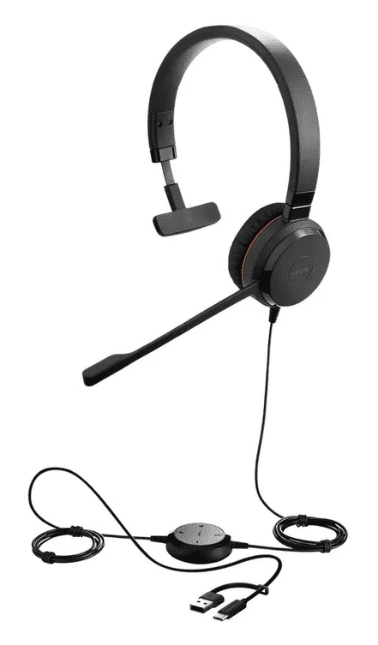
Reception staff and floor-based contact centre agents can’t afford to lose touch with what’s happening around them. The Jabra Evolve 30 II MS Mono (SKU: 5393-823-309) leaves one ear open, keeping staff connected to both the call and the room. For roles like these, which Jabra headset is best for calls usually has a fairly clear answer.
Roles That Need Deep Focus on Calls
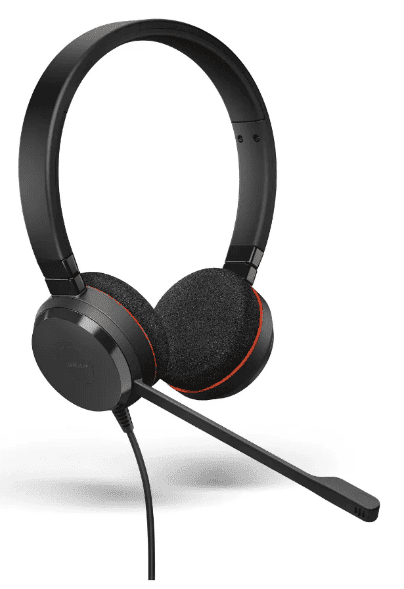
Recruiters, project managers, and hybrid staff running back-to-back meetings need something different. The Jabra Evolve 30 II MS Stereo (SKU: 5399-823-309) covers both ears, helping block out surrounding noise during longer, more demanding calls. Teams still asking which Jabra headset is best for calls in focus-heavy roles usually land here.
Neither model replaces the other. Matching devices to real call patterns, not job titles, is what actually drives ROI.
What Changes When You Get This Right
Businesses that invest properly in the best noise-cancelling headsets for offices typically notice the shift within weeks, not months. Getting a clear answer to which Jabra headset is best for calls is usually a small part of a much bigger improvement.
- Meetings start and finish closer to schedule
- Fewer follow-up calls to clarify missed details
- Contact centre teams report less end-of-shift fatigue
- IT spends less time troubleshooting call-quality complaints
- New hires ramp up faster during onboarding calls
None of these outcomes rely on a single flagship feature. They come from matching the right device to the right role, consistently, across the business.
Key Takeaways
- Office audio is a cross-functional investment, not just an IT purchase
- Business stage and call volume should shape the decision, not headcount alone
- ROI comes from fewer errors, shorter meetings, and steadier staff performance
- Adoption and standardisation matter as much as the hardware itself
- Comparing providers properly means testing real scenarios, not spec sheets alone
- The best noise-cancelling headsets for offices earn that title through fit, not features alone
Frequently Asked Questions
#1. Is this really worth prioritising over other IT investments?
For teams spending hours a day on calls, yes. Communication quality affects nearly every other business output, which is exactly why the best noise-cancelling headsets for offices deserve a genuine business case.
#2. Which Jabra headset is best for calls in a hybrid team?
It depends on the role. High-focus roles usually suit the stereo model, while high-awareness roles suit the mono option instead.
#3. How long does a proper evaluation usually take?
Most businesses can complete a short trial and reach a decision within two to four weeks.
#4. Do small teams really need to formalise this decision?
Yes, even at ten to fifteen seats. Informal, one-off purchases are exactly how mixed, harder-to-support fleets start.
Ready to Compare Your Options?
Office audio is one of the few workplace investments that pays back quickly, across productivity, customer experience, and staff wellbeing alike. Getting the best noise-cancelling headsets for offices right the first time also means fewer repeat purchases and less disruption down the line.
If your organisation is ready to move forward, Explore Jabra Business Headsets, compare office communication solutions, and check current availability for your team. Still deciding which Jabra headset is best for calls in your specific environment? Our specialists can help you shortlist the right fit for every role on your team.
Get a Quote today and let TECHOM Shop help you build a business case that holds up beyond the purchase order.

Peter Pawlak, Director of Sales and Customer Advocate, brings over 15 years of experience helping ambitious business owners grow with confidence. His mission is to empower people to start, build, and run their businesses successfully, turning ideas into thriving ventures. Peter’s passion for business transformation and his results-driven approach have been key to guiding entrepreneurs toward faster and smarter growth.