





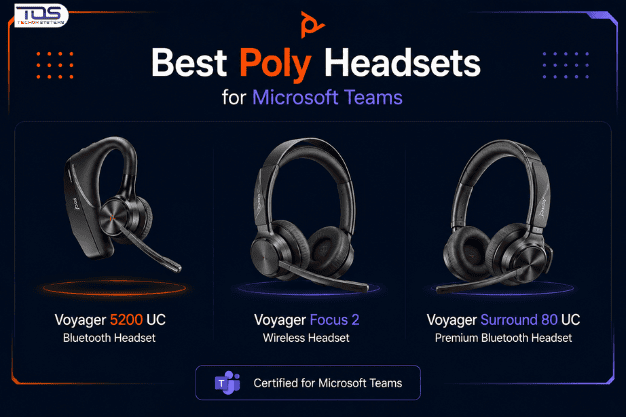
Standardising on Best Poly Headsets for Microsoft Teams is one of the more overlooked decisions that shapes how efficiently an organisation actually runs. IT Managers and Procurement teams rarely get much credit for a smooth headset rollout, but they hear about it fast when the wrong device leaves employees fighting call quality instead of doing their jobs.
If you’re evaluating options for your business right now, you already understand the stakes. This isn’t about picking a device off a shelf. It’s about choosing a communication standard that supports hybrid work, protects IT time, and scales as the business grows. The right decision here saves procurement teams from repeating the same evaluation every twelve months.
Key Business Insights
|
Why Standardising on One Headset Platform Pays Off
Businesses that let every department choose its own headset end up managing a patchwork of firmware versions, warranty terms and support processes. That patchwork is expensive, even when nobody notices it on a spreadsheet.
Standardising on Best Poly Headsets for Microsoft Teams gives IT teams a single support playbook. One firmware update process, one set of pairing instructions, and one supplier relationship replace a dozen inconsistent ones.
For growing organisations, this consistency also protects onboarding. New starters get a known device with a known setup process, instead of IT scrambling to support whatever happened to be ordered that month.
It also strengthens negotiating position with suppliers. Businesses ordering consistent volumes of the same model, rather than small ad-hoc purchases across departments, are usually better placed to secure fleet pricing and priority stock access.
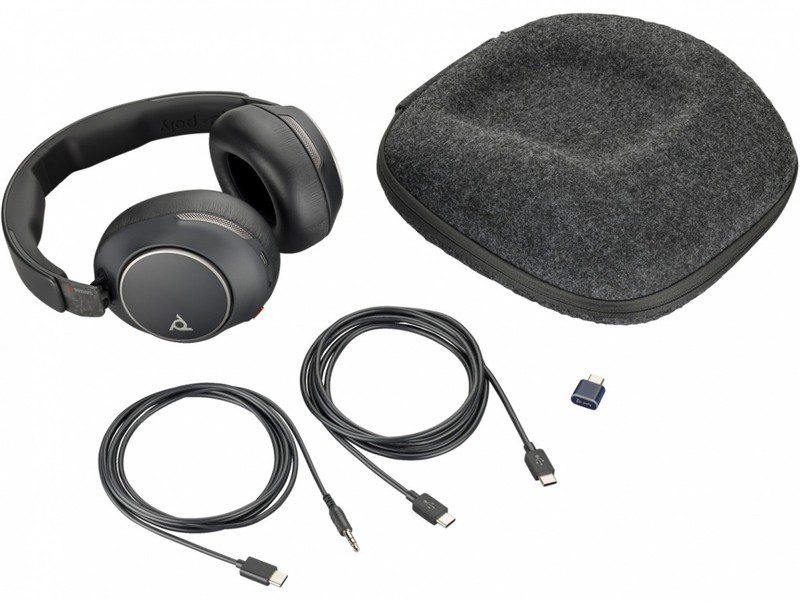
A Procurement Decision Framework
Before requesting quotes, it helps to work through four questions that shape the right purchase. This keeps procurement focused on business outcomes rather than specifications alone.
- Who uses the headset, and how mobile are they during a typical day?
- What’s the acceptable noise environment: quiet office, open-plan floor, or contact centre?
- How many units need managing, and does IT need centralised device visibility?
- What’s the expected refresh cycle, and what warranty terms actually match it?
Answering these honestly narrows the shortlist quickly. It also gives procurement a defensible rationale when finance asks why a particular model was chosen over a cheaper alternative.
Matching Devices to Business Size and Environment
Small and Mid-Sized Teams
Smaller businesses often need flexibility more than fleet management tools. The Poly Voyager Free Bluetooth Headset (SKU: VFREE20) suits this profile, offering a compact, true-wireless design that’s easy to issue to new staff without a lengthy setup process.
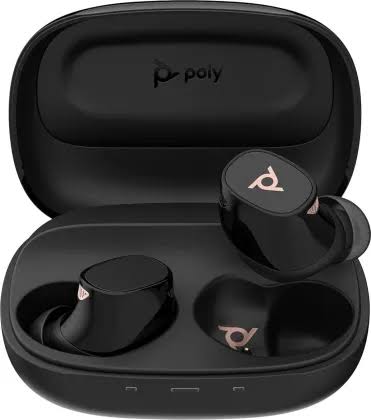
It’s a practical choice for consultancies, professional services firms and small hybrid teams that need dependable Teams-certified audio without investing in complex device management infrastructure.
Larger Teams and Contact Centre Environments
Organisations running structured shifts or high call volumes need something built for endurance. The Poly BackBeat GO 810 Wireless Headphones (SKU: BBGO600NAV) hold up well in this environment, with active noise cancellation and over-ear comfort designed for extended use.
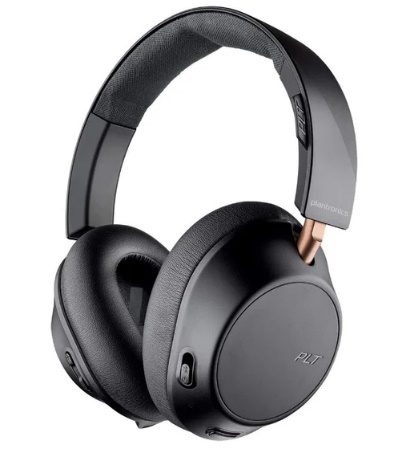
Contact centres, sales floors and operations teams benefit most here, where consistent audio quality across dozens or hundreds of agents directly affects customer experience and productivity metrics.
Poly Headset Deployment for Business – What IT Managers Need to Plan For
Best Poly Headsets for Microsoft Teams for business starts well before devices arrive. IT teams should confirm firmware versions, test Bluetooth performance in real office conditions, and prepare a rollout schedule that doesn’t clash with peak meeting periods.
A staged rollout, department by department, gives support staff room to resolve pairing questions without being flooded on day one. It also creates a natural feedback loop before the full fleet goes live.
Businesses that treat this as a change management project, not just a delivery date, consistently report faster adoption and fewer avoidable support tickets.
Vendor Evaluation Checklist
Not every supplier offers the same level of support after the purchase order is signed. Before committing, it’s worth confirming the following with any prospective vendor.
- Genuine hardware and current firmware, not grey-market or reconditioned stock.
- Australian-based warranty support and realistic replacement turnaround times.
- Volume pricing and consistent stock availability for larger rollouts.
- A named point of contact for procurement questions, not just a support ticket queue.
Working with an established Australian technology supplier such as TECHOM Systems Shop simplifies this evaluation, since sourcing, warranty and local support sit with one accountable partner rather than several disconnected vendors.
Side-by-Side Procurement Comparison
For businesses weighing both device types across a mixed workforce, this comparison summarises where each model earns its place.
| Procurement Factor | Poly Voyager Free (VFREE20) | Poly BackBeat GO 810 (BBGO600NAV) |
| Ideal fleet size | Small to mid-sized teams | Large or shift-based teams |
| Deployment complexity | Low, minimal setup required | Moderate, benefits from staged rollout |
| Best environment | Hybrid offices, client meetings | Contact centres, open-plan floors |
| Typical refresh cycle | Every 2 to 3 years | Every 3 to 4 years |
Lifecycle Management and Total Cost of Ownership
Procurement decisions rarely fail at the purchase order. They fail two years later, when warranty gaps, discontinued models or inconsistent firmware create unplanned costs.
Choosing Best Poly Headsets for Microsoft Teams with a clear lifecycle plan avoids this. Budgeting for replacement cycles upfront, rather than reacting when devices fail, keeps IT spending predictable.
Businesses should also factor in the administrative cost of managing multiple device standards. Consolidating around fewer, well-supported models reduces that overhead significantly over a three to five year horizon.
It’s also worth reviewing how a vendor handles end-of-life models. A supplier that flags upcoming discontinuations early gives procurement time to plan a smooth transition, rather than scrambling to source spare units for a device that’s no longer manufactured.
Getting Poly headset deployment for business right from day one also protects this lifecycle plan, since a rushed initial rollout tends to create the firmware and warranty inconsistencies that shorten a fleet’s useful life.
Reducing Risk and Protecting Business Continuity
A headset failure during a critical client call or board meeting is more than an inconvenience. It’s a business continuity risk that’s easy to overlook until it happens.
Maintaining a small buffer of spare units, and Request quote in advance from a trusted supplier, gives IT teams a fast replacement path rather than an emergency retail purchase.
This matters most for client-facing and leadership roles, where a dropped call has visible consequences in front of customers. Building continuity into the procurement plan, rather than treating it as an afterthought, protects both productivity and reputation.
Key Takeaways
- Standardising on one headset platform reduces IT overhead and simplifies support.
- Use a procurement framework based on mobility, environment and fleet size.
- Plan the headset rollout as a staged deployment, not a single delivery date.
- Total cost of ownership, not unit price, should guide the final decision.
- An accountable Australian supplier protects warranty, stock and long-term support.
Frequently Asked Questions
#1. How do we decide between wireless earbuds and over-ear headsets for a mixed workforce?
Base it on mobility and environment rather than preference. Hybrid staff who move between locations generally suit lightweight earbuds, while shift-based or open-plan teams benefit from over-ear models built for extended comfort.
#2. What’s the biggest procurement mistake businesses make with headset rollouts?
Buying on unit price alone. A cheaper device with weak warranty support or limited stock availability often costs more in replacement cycles and IT hours than a slightly higher-priced, well-supported alternative.
#3. How should IT plan a Poly headset rollout without disrupting daily operations?
Stage the rollout by department rather than deploying company-wide on one day. This gives support teams time to resolve setup questions and lets IT catch issues early, before they affect the whole business.
#4. Does headset standardisation actually reduce IT support workload?
Yes. Supporting one or two known models, with consistent firmware and a single supplier relationship, is significantly faster to manage than troubleshooting a mix of inconsistent devices across departments.
#5. How often should businesses budget to refresh their headset fleet?
Most organisations plan for a refresh every two to four years, depending on usage intensity. Contact centre and shift-based teams typically sit at the shorter end of that range due to heavier daily use.
Making the Final Call
Choosing the right platform for Poly headsets for business communication is easier with the right partner behind the decision. TECHOM Shop can help you compare options against your fleet size, environment and refresh timeline.
Explore the full Poly range to compare models, check current availability, or Request quote tailored to your organisation’s procurement requirements. A well-planned rollout today prevents the support headaches of an inconsistent fleet down the track.

Peter Pawlak, Director of Sales and Customer Advocate, brings over 15 years of experience helping ambitious business owners grow with confidence. His mission is to empower people to start, build, and run their businesses successfully, turning ideas into thriving ventures. Peter’s passion for business transformation and his results-driven approach have been key to guiding entrepreneurs toward faster and smarter growth.